

Beach algae samples were well below WHO ‘no-bathing’ values

But likely recurrence prompts development of long-term monitoring programme
ENVIRONMENT officials have acknowledged that a repeat of this year’s blue green algae crisis is likely in future years.
The warning came with publication of a report on water samples taken at bathing waters in response to algal blooms appearing in the summer and autumn of 2023.
The Department of Agriculture Environment and Rural Affairs said the ‘blue green algae events’ were unprecedented and required urgent development of new operational protocols around testing.
But at all times, said officials, DAERA acted in the interests of public health when giving advice against bathing at the sites. In some cases, this advice was given as a precautionary measure before results were confirmed.
Sample results published this week provide a breakdown of cell counts and cyanotoxin concentrations used by the World Health Organisation (WHO) to determine bathing water safety.
Lough Neagh was the focus for much of the sampling, but officials said the movement of algae downstream along the River Bann prompted monitoring at North Coast beaches and harbours.
Procedures were endorsed by the Scottish government and WHO - if there was a clearly visible “dense blue-green algal scum” a no-bathing order was issued without further testing.
Less definable visible traces prompted sampling to confirm toxicity levels.
The report says the first dense blooms of blue green algae were spotted at Rea’s Wood on the shores of Lough Neegh on June 12.
Dangerous levels were detected twice in August.
In September however, the bloom was sufficiently visible and dense not to require water sampling to confirm risk to health.
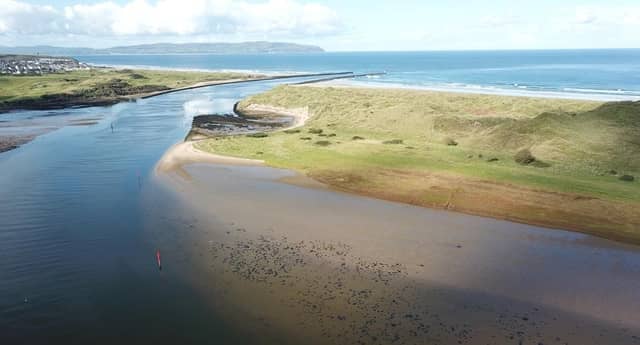
The report says observations of blue-green algae scum were first confirmed along the Lower Bann in early July at locations that included the Barmouth.
Its appearance on beach shorelines, in very small amounts, were noted on Castlerock and Portstewart Strand on July 5, with further small amounts confirmed on the westward adjoining beach of Downhill on July 9.
Reactive water sampling was initiated, and results showed that at no stage on popular beaches did levels exceed the WHO recommended ‘no bathing’ mark.
Read more in this week's Chronicle.